
10 min read
Disclosure: As an Amazon Associate and eBay Partner Network publisher, we earn from qualifying purchases. This doesn’t affect what we recommend or how we describe it.
Cooler backpacks serve three distinct types of buyers: hikers looking to keep drinks cold on the trail, commuters who want a stylish lunch solution, and families or groups who need portable cooling for outings. Each group values different features—size, weight, portability, or looks. The right cooler backpack for you depends on whether you prioritize compactness, versatility, or premium insulation for longer adventures.
Top picks at a glance
- Stanley All Day Madeline Mini Backpack Cooler — the most compact and stylish option
- Titan by Arctic Zone 30 Cans Collapsible Backpack Cooler with Ice — the most versatile and collapsible choice
- RovR Travelr 24L Soft Cooler Backpack — the premium soft cooler
Compact style vs. maximum versatility vs. premium performance
Across the current market, cooler backpacks range from fashion-forward mini packs to rugged, high-capacity soft coolers. For this review, three standout options cover the spectrum: the Stanley All Day Madeline Mini Backpack Cooler for compact style, the Titan by Arctic Zone 30 Cans Collapsible Backpack Cooler with Ice for adaptability and carrying capacity, and the RovR Travelr 24L Soft Cooler Backpack for premium insulation and durability. Each brings a different balance of features, making it easier to match your needs to the right model.
Side-by-side comparison of top cooler backpacks

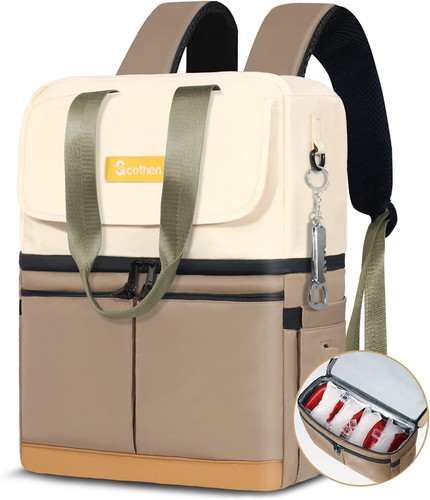
Pictured: Stanley Madeline Mini
| Product | Price | Best For | Capacity | Weight | Unique Feature |
|---|---|---|---|---|---|
| Stanley All Day Madeline Mini Backpack Cooler |
$$$ | Most compact and stylish | 7 L | 1.7 lbs | Fashion-forward design |
 Titan by Arctic Zone 30 Cans Collapsible Backpack Cooler with Ice |
$$ | Versatile and collapsible | 22 L (30 cans) | 2.2 lbs | Collapses for storage |
 RovR Travelr 24L Soft Cooler Backpack |
$$ | Premium soft cooler | 24 L | 2.9 lbs | High-end insulation |
Pricing key: $ marks the budget tier, $$ the mid-range, $$$ the premium picks. Tiers are relative to the products in this comparison; actual prices update live below.
Stanley Madeline Mini: best for stylish, low-bulk carrying
The Stanley Madeline Mini stands out for buyers who want a lighter, more fashionable cooler backpack. With a 7-liter capacity and weighing just 1.7 pounds, it is designed for short outings, solo picnics, or as an upscale lunch cooler. Its compact size means you can carry it anywhere without feeling weighed down, and the design resembles a classic daypack more than a typical cooler. This makes it an especially strong match for urban commuters or anyone who wants a cooler that doesn’t look out of place in casual settings.
Despite its small size, the Stanley Madeline Mini uses insulated lining and leak-resistant zippers to keep contents cool for several hours. However, the limited capacity—about six cans plus ice—means it’s less suited for group use or all-day excursions. If style, portability, and minimal bulk are your top priorities, this is the clear standout.
Titan by Arctic Zone 30 Cans: the most versatile and storage-friendly
The Titan by Arctic Zone 30 Cans Collapsible Backpack Cooler targets users who need flexibility. Its 22-liter capacity (advertised for up to 30 standard cans) is enough for a day’s worth of food and drinks for two to three people, making it suitable for picnics, beach days, or tailgates. The standout feature is its collapsible construction: when empty, it folds down for compact storage, a real advantage for those with limited closet or car space.
By spec, the Titan by Arctic Zone 30 Cans uses a Therma-Flect radiant barrier and high-density insulation, aiming to keep ice for up to 24 hours under moderate conditions. The backpack straps are padded and adjustable, and the outer shell is water- and stain-resistant. This model is for buyers who want a balance of capacity, packability, and affordability, without stepping into the premium price tier.
RovR Travelr 24L: for those who want premium cooling and durability
The RovR Travelr 24L Soft Cooler Backpack is positioned as the premium performer among portable soft coolers. With a 24-liter capacity and weighing 2.9 pounds, it offers more room and heavier-duty construction than the Stanley Madeline Mini, and more robust insulation than the Titan by Arctic Zone 30 Cans. The manufacturer lists puncture-resistant fabric, waterproof zippers, and advanced insulation capable of keeping ice solid for up to 72 hours (under optimal conditions).
This backpack is built for longer adventures—think camping weekends, fishing trips, or remote hikes where keeping food and drinks cold for days is essential. The trade-off is a higher price and a more utilitarian look. If you need maximum cold retention and don’t mind a slightly bulkier pack, the RovR Travelr 24L is the strongest match.
Related Guides
- Our guide to Choosing the Right Anti-Theft Backpack: Features That Matter
- Bike Locks That Are Actually Worth Buying
- Baby Bottle Sterilizers That Are Worth Buying
- A No-Nonsense Guide to the Best Outdoor Playhouses for Kids
- A Practical Guide to Choosing the Right Car Seat Organizer
- Choosing the Right Silicone Spatula for Everyday Cooking
- Browse all Coolers & Picnic Gear →
How these cooler backpacks made the shortlist
The criteria for comparing cooler backpacks are driven by real-world use: capacity (in liters or can count), insulation performance (stated ice retention time), weight, packability, and durability of materials. For this shortlist, only models with clearly stated capacities (at least 7 liters), fully insulated compartments, and backpack-style carrying straps were considered. Collapsibility and weight were weighed for buyers with storage or portability constraints, while listed ice retention times and outer material quality were prioritized for outdoor and travel users.
This evaluation is research-based, relying on manufacturer specifications, published features, and market positioning. No hands-on testing or ownership claims are made. Products without clear capacity specs, unbranded models, or listings that bundled unrelated items were excluded to keep the focus on dedicated, reputable cooler backpacks. If you only need a standard lunch bag or a rolling hard cooler, these backpacks may not be the right fit—look for a category that better matches your use case.
Hidden and ongoing costs to factor in
Beyond the initial purchase, cooler backpacks can come with several ongoing or hidden costs:
- Ice packs or ice purchases: Reusable ice packs typically cost $5–$15 each and may need replacement every 1–2 years due to leaks or wear. If you rely on bagged ice, expect $2–$5 per outing.
- Cleaning supplies: Food-safe cleaning sprays or wipes ($10–$20 per year) help prevent mold and odors, especially after storing perishables.
- Replacement liners or zipper repairs: Heavy use can wear out liners or zippers, which may cost $10–$30 to repair or replace, depending on the model and service availability.
- Accessory pouches or organizers: Some users opt for extra internal pouches ($5–$15) to keep snacks, utensils, or dry goods separated from the main compartment.
- Occasional waterproofing treatments: For models with fabric exteriors, a bottle of fabric protector ($8–$12) applied annually can extend water resistance and lifespan.
Factoring in these costs helps you budget for the real total cost of ownership over a year or two, not just the upfront price.
How to Clean and Maintain Your Cooler Backpack
Proper care and cleaning are crucial to ensure your cooler backpack lasts for years and maintains its insulation performance. After each use, empty the backpack completely and wipe down the interior with a mild soap solution and warm water. For stubborn stains or lingering odors, a mixture of baking soda and water can be effective—let it sit for 15 minutes before rinsing. Always allow the backpack to air dry fully with the compartments open to prevent mold or mildew buildup.
Pay special attention to the zippers and seams, as these areas are most prone to leaks or wear. Periodically check for any cracks in the lining or damaged stitching, and clean zippers with a brush to remove debris that could compromise their seal. If your backpack features removable liners or inserts, wash them according to the manufacturer’s instructions. Avoid harsh chemicals or machine washing, as these can degrade waterproof coatings and insulation layers. Regular maintenance not only keeps your cooler backpack hygienic but also preserves its ability to keep items cold for the stated retention times.
If you want your new cooler backpack in time for your next outing, fast delivery can make all the difference.
New Prime members can start with a free trial that includes fast, free delivery on eligible items.
Start a free Prime trialAffiliate link: we may earn a fee if you sign up, at no cost to you.
FAQ: Cooler backpacks for day trips, picnics, and everyday use
How long will drinks stay cold in these cooler backpacks?
Ice retention varies by model: the Stanley Madeline Mini typically holds ice for 4–6 hours, the Titan by Arctic Zone 30 Cans claims up to 24 hours, and the RovR Travelr 24L lists up to 72 hours under optimal conditions. Performance depends on ambient temperature, how often you open the pack, and the amount of ice used.
Which cooler backpack is best for hiking or long walks?
The Stanley Madeline Mini is the lightest and most compact, making it ideal for short hikes or city walks. For longer treks where you need to carry more food and drinks, the RovR Travelr 24L offers better insulation and greater capacity, but it is heavier and bulkier.
Can these cooler backpacks fit a full lunch and drinks for two people?
The Titan by Arctic Zone 30 Cans and RovR Travelr 24L both have enough capacity (22–24 liters) to hold lunch, snacks, and drinks for two or more people. The Stanley Madeline Mini is best for solo use or a light lunch and a few drinks for one person.
Are these cooler backpacks leakproof?
All three models advertise leak-resistant or waterproof linings and zippers. However, no soft cooler is completely immune to leaks if tipped or overfilled. Using sealed containers for liquids and not overpacking ice can help prevent leaks.
Stanley Madeline Mini vs. Titan by Arctic Zone 30 Cans: which is better for daily commuting?
The Stanley Madeline Mini is more compact and stylish, making it easier to carry on crowded transit or to the office. The Titan by Arctic Zone 30 Cans, while larger, offers more capacity and collapses for storage but may feel bulky for everyday commutes unless you regularly carry extra food or drinks.
What kind of warranty or return policy should I expect?
Warranty coverage varies by manufacturer. Stanley typically offers a lifetime warranty against defects, while Arctic Zone and RovR provide limited warranties (often one year). Always check the specific listing and consider buying from retailers with a clear return policy for peace of mind.
The verdict: Which cooler backpack is right for you?
If you want a cooler backpack that doubles as a stylish daypack and you only need to carry a small lunch or a few drinks, the Stanley Madeline Mini is the best fit. For buyers who prioritize versatility, collapsibility, and enough capacity for group outings, the Titan by Arctic Zone 30 Cans is the strongest all-rounder. If your main concern is keeping contents cold for extended periods—like camping weekends or long road trips—the RovR Travelr 24L is the premium performer, justifying its price with advanced insulation and rugged build.
For more on how to safely transport food and drinks outdoors, see this advice from the U.S. Department of Agriculture Food Safety and Inspection Service. Choose your cooler backpack based on how and where you’ll use it most, and factor in the extra costs for ice and upkeep over time.



Last updated: November 2026 · Our editorial process